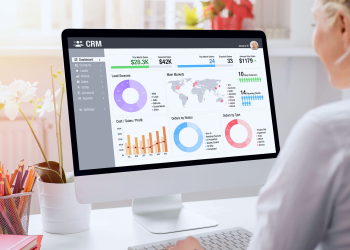
Stop guessing what works and start knowing. This article provides real estate agents and brokers with a practical framework to accurately track lead conversion rates from every marketing channel, empowering you to optimize your spend, refine your strategies, and drive predictable business growth.
Read Time: 8-10 minutes (approx. 2000 words)
What You’ll Learn:
- The critical importance of measuring conversion beyond just lead volume.
- The essential formula for calculating real estate lead conversion rates.
- Step-by-step methods for attributing leads to their specific source channels.
- How to leverage your CRM and other tools for effective data collection and analysis.
- Strategies to use conversion rate insights to optimize your marketing spend and improve ROI.
Ideal Reader:
This article is tailored for real estate agents and brokers who are investing in lead generation but aren’t sure which channels are truly delivering the best return. If you’re ready to make data-driven decisions, maximize your marketing budget, and elevate your business by understanding your true cost per acquisition per channel, this guide is for you.
Introduction
In real estate, lead generation often feels like pouring money into a black box. You launch a Facebook ad, set up a Google PPC campaign, attend networking events, and religiously post on social media. Leads come in, some convert, some don’t. But without a clear understanding of which channels are delivering the most qualified leads and ultimately the most closed deals, you’re flying blind. This uncertainty leads to wasted marketing dollars, inefficient time management, and a persistent question: “Is this working?”
The truth is, simply generating leads isn’t enough. The real power lies in tracking and measuring real estate lead conversion rates across different channels. This analytical approach is crucial because it allows you to identify your most effective lead sources, optimize your marketing spend, and build a scalable, profitable real estate business. It’s about moving from hope to strategy, from anecdote to undeniable data.
The Problem/Challenge: The Illusion of Activity vs. Real Results
A common misconception among real estate professionals is that a high volume of leads equals success. Agents often celebrate a surge in inquiries from a new ad campaign, only to be frustrated when those leads don’t translate into signed contracts or closed transactions. This disconnect stems from several key challenges:
- Lack of Attribution: Leads enter the CRM, but their source (e.g., specific Facebook ad, Google search, open house, referral) isn’t consistently recorded or is lost.
- Undefined Conversion Stages: What constitutes a “converted” lead? Is it an initial phone call, a signed buyer agreement, or a closed deal? Without clear definitions, conversion rates are meaningless.
- Manual Tracking Headaches: Attempting to track everything via spreadsheets is time-consuming, prone to error, and rarely provides real-time insights.
- Fear of Data: Many agents feel intimidated by numbers, preferring to rely on intuition rather than concrete metrics, which hinders true growth.
- Wasted Budget: Without knowing which channels convert best, agents continue to allocate budget to underperforming sources, missing opportunities to double down on what works.
The pain point is tangible: marketing dollars are spent, time is invested, but the return on investment (ROI) remains a mystery. This “spray and pray” approach is unsustainable in a competitive market.
The Solution/Opportunity: Data-Driven Optimization
The “Aha!” moment comes when you realize that every lead is a data point, and understanding those data points is your secret weapon. By systematically tracking and measuring real estate lead conversion rates across different channels, you gain the clarity needed to optimize your entire marketing and sales funnel.
This works because agents need data to optimize. “Track and measure” and “conversion rates across channels” pinpoint specific analytical needs that, once addressed, directly lead to more informed decisions and better financial outcomes. It allows you to shift from reactive lead chasing to proactive, strategic business development, ensuring every lead generation effort contributes meaningfully to your bottom line.
Insightful Analysis & Data: The Power of Knowing Your Numbers
Understanding your conversion rates isn’t just a “nice-to-have”; it’s a fundamental driver of profitability and scalability in real estate.
- Industry Benchmarks: While general real estate lead-to-transaction conversion rates can vary widely (from 0.4% to 1.2% according to the National Association of REALTORS® (NAR), or even up to 3-5% for online leads in some reports), knowing your specific rates for each channel is paramount. For example, some sources indicate real estate Facebook Ads convert at an average of 10.68%, while Google Ads (Search) might be around 3.40%. These benchmarks highlight the variability and the need for personalized data.
- Cost Efficiency: New clients can cost 6-7 times more to acquire than retaining existing ones or converting warm leads. By optimizing your highest-converting channels, you reduce your overall Customer Acquisition Cost (CAC) and improve your marketing ROI.
- Optimized Resource Allocation: If your organic search leads convert at 5% and your paid social leads convert at 1%, where should you invest more time and money? Data gives you the answer. This directly impacts where you spend your marketing budget and allocate your team’s efforts.
- Predictable Growth: With reliable conversion data, you can accurately forecast how many leads you need from each channel to hit your transaction goals. If your goal is 20 closed deals and your average conversion rate is 2%, you know you need approximately 1,000 qualified leads.
This analytical insight shifts your business from reactive guesswork to proactive, data-informed strategy.
Actionable, Practical Steps: Your Conversion Tracking Playbook
Here’s a step-by-step guide to setting up robust lead conversion tracking:
Step 1: Define Your Conversion Events & Stages
Before you track, define what success looks like at each stage.
- Lead: An initial inquiry (website form, phone call, email, open house sign-in).
- Qualified Lead (SQL): A lead you’ve spoken with who meets your basic criteria (e.g., pre-approved, motivated, clear timeline).
- Active Client (Signed Agreement): A buyer or seller who has signed a representation agreement with you.
- Under Contract: A client with an accepted offer on a property (buyer) or a listed property with an accepted offer (seller).
- Closed Deal: The transaction has completed, and commission is earned.
Implementation: These stages should be clearly defined in your CRM’s pipeline or deal stages.
Step 2: Implement Consistent Lead Source Tracking
This is the bedrock of channel-specific conversion rates.
- Utilize Your CRM’s “Lead Source” Field: For every new lead, ensure the primary source is accurately recorded. This should be a mandatory field.
- Examples: “Google PPC – Buyer Campaign,” “Facebook Lead Ad – Seller,” “Zillow Inquiry,” “Open House – [Property Address],” “Referral – [Referral Name],” “Website Organic Search,” “Direct Mail – [Campaign Name],” “YouTube Channel.”
- Unique Tracking Links (UTM Parameters): For online campaigns (website, emails, social media ads), use UTM parameters on your links.
- Example: yourwebsite.com/contact?utm_source=facebook&utm_medium=paid_ad&utm_campaign=summer_buyers
- Pro Tip: Use a UTM builder tool (many free ones available online) to create consistent, trackable links.
- Dedicated Phone Numbers (Call Tracking): For specific campaigns (e.g., direct mail, print ads, specific online ads), use unique, trackable phone numbers that forward to your main line. Call tracking software integrates this data with your CRM.
- “How Did You Hear About Us?”: Always ask this question for walk-ins, phone calls without tracking, and in-person events. Record their answer. Provide specific options to guide them.
Implementation: Your CRM should have a robust “Lead Source” field, and you’ll need a system for creating and using UTMs/call tracking.
Step 3: Integrate Your Tools & Automate Data Flow
Manual data entry is prone to error and takes time.
- CRM as Your Central Hub: Ensure all leads from different sources (website forms, Zillow, social media lead ads) automatically flow into your CRM. Most modern CRMs offer direct integrations or Zapier connections.
- Website Analytics (Google Analytics): Connect your website to Google Analytics to understand traffic sources, visitor behavior, and conversion points (e.g., form submissions).
- Marketing Platform Integration: Link your Facebook Ads Manager, Google Ads, and email marketing platforms to your CRM where possible. This allows for seamless data transfer and a holistic view.
Expert Insight: Your CRM is the heart of this strategy. Invest in one that allows for custom fields, robust reporting, and integrations with your key lead sources. Without it, scaling this tracking will be challenging.
Step 4: Calculate & Analyze Conversion Rates
Once data flows, it’s time to crunch the numbers.
- The Formula:
Conversion Rate (%) = (Number of Conversions / Number of Leads from that Channel) * 100- Example: If your Google PPC campaign generated 100 leads and 3 of them became closed deals, (3 / 100) * 100 = 3% conversion rate for Google PPC.
- Segment by Channel & Stage: Calculate conversion rates at each defined stage (Lead to SQL, SQL to Active Client, Active Client to Closed) for each lead source. This tells you where leads are dropping off and which channels deliver “stickier” prospects.
- Calculate Cost Per Lead (CPL) & Cost Per Acquisition (CPA):
- CPL = Total Spend on Channel / Number of Leads from Channel
- CPA = Total Spend on Channel / Number of Closed Deals from Channel
- Example: If you spent $500 on Facebook Ads and got 50 leads (CPL = $10), and 2 of those leads closed (CPA = $250), compare this to a Google PPC campaign where CPL might be higher, but CPA is lower due to better conversion.
- Regular Reporting: Set up monthly or quarterly reports in your CRM or a spreadsheet to review these metrics. Identify trends, high-performing channels, and underperforming ones.
Pro Tip: Don’t just look at the overall conversion rate. A channel might bring in fewer leads, but if they convert at a much higher rate, it could be more valuable than a high-volume, low-conversion source.
Step 5: Optimize Based on Insights
This is where your data turns into actionable strategy.
- Reallocate Budget: Shift marketing spend from channels with low conversion rates and high CPAs to those performing well.
- Refine Targeting: For underperforming channels, analyze if your targeting or messaging needs adjustment. Maybe your Facebook ads are reaching people who are only casually curious, while your Google Ads are capturing high-intent buyers.
- Improve Follow-Up: If leads are dropping off between “Lead” and “SQL” for a specific channel, re-evaluate your initial response time and nurturing sequence for that source.
- Test New Channels: With a clear tracking system in place, you can confidently test new lead generation strategies and quickly determine their effectiveness.
Sarah, an agent who used to spend hundreds of dollars each month on generic online ads, felt like she was just throwing money into the wind. She’d get leads, but couldn’t pinpoint which ads led to actual deals. After implementing a detailed tracking system, she discovered her referral leads converted at a phenomenal 20%, her Google Ads at 3%, and her general social media ads at less than 0.5%. Armed with this data, she slashed her spending on low-converting social ads and reinvested those funds into Google Ads and, more importantly, a robust client appreciation program to boost referrals. Within six months, her overall conversion rate doubled, and her profit margins significantly increased. She no longer felt anxious about her marketing budget; she felt empowered, knowing exactly where her efforts were paying off. This isn’t about being a data scientist; it’s about being a smarter business owner. You have the power to turn your data into your most valuable asset.
How to Grow / Next Level Advice: Advanced Analytics & Predictive Power
Once you’ve mastered the basics of conversion tracking, consider these advanced steps:
- Multi-Touch Attribution Modeling: Understand that leads rarely convert from a single touchpoint. Explore attribution models (e.g., first-touch, last-touch, linear, time decay) in your CRM or marketing analytics tools to give credit to all channels involved in a conversion path.
- Lifetime Value (LTV) per Channel: Go beyond a single transaction. Track the average LTV of clients acquired from each channel (including referrals generated from those clients). A channel with a seemingly lower initial conversion rate might yield clients with a much higher long-term value.
- Predictive Analytics: Use historical conversion data within your CRM to predict future lead behavior and identify leads with the highest probability of converting, allowing for hyper-focused follow-up.8
- A/B Testing Conversion Paths: Systematically test different landing pages, lead magnet offers, and follow-up sequences for specific channels to continually optimize conversion rates.
- Integrate with Financial Reporting: Tie your conversion data directly into your profit and loss statements to see the real financial impact of your marketing efforts.
Conclusion
Tracking and measuring real estate lead conversion rates across different channels transforms your marketing from a series of educated guesses into a precise, data-driven science. By clearly defining your conversion stages, meticulously attributing lead sources, leveraging your CRM, and consistently analyzing your performance, you gain unparalleled clarity into what truly drives your business. This understanding allows you to optimize your marketing spend, refine your sales processes, and ultimately build a more efficient, profitable, and predictable real estate enterprise.